ServicesTorque & Cleans
Torque & Cleans in Dalworthington Gardens
Screws in your electrical panel loosen over time. Loose connections run hot, and heat is how panels get damaged. We tighten every termination to spec, clean out the dust and tell you ahead of time exactly when the power goes off and comes back.
What a Torque and Clean Actually Is
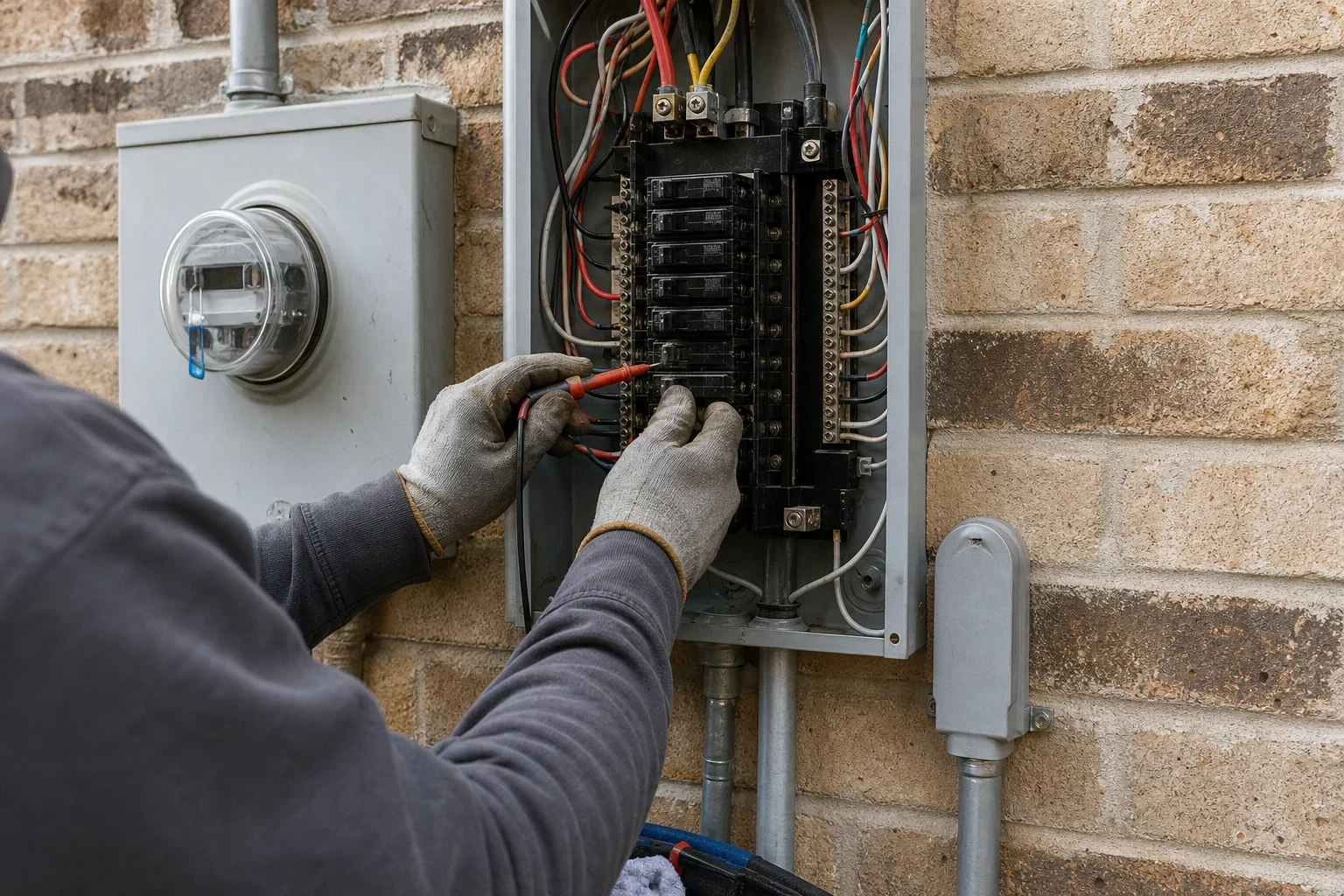
It is maintenance for the box that feeds your whole house. Every wire in the panel is held by a screw or lug. Each time a circuit carries a load, the metal warms up and expands. When it cools, it shrinks back. After years of that, connections that were tight on install day can work loose.
Once a joint slips even a little, current has a harder time crossing it. That extra resistance shows up as heat, and the heat makes the joint slip further. It feeds on itself. You may never notice until a breaker trips for no clear reason, a light flickers, or the insulation near a lug turns brown. A torque and clean catches that early. We bring each connection to the torque value the manufacturer lists. Then we vacuum out what has piled up behind the cover over the years, like cobwebs, dead bugs and fine grit.
Long summer stretches of air conditioning keep panels around here working hard for months, which is a good reason to check yours before the heavy season starts. If we find a part that is too far gone, we tell you and give you options, such as electrical repair or a panel upgrade. We do not swap parts just because we have the cover off.
What We Do During the Visit
- Planned power shutoff
- We tell you before the day how long the power will be off. Most of the visit happens with the panel dead, so set aside fridge items you care about and save your work.
- Torque to manufacturer spec
- We use a torque screwdriver or wrench and the values printed on the panel label or breaker. Guessing by feel either leaves a screw loose or crushes the wire, and neither is good.
- Cleaning the enclosure
- Dust, dirt and debris come out with a vacuum and dry brushes. No sprays or liquids go inside a panel.
- Heat and corrosion check
- We look at every lug, breaker and bus connection for discoloration, pitting, melted insulation and rust. Anything we find gets a photo so you can see it yourself.
- Aluminum conductor attention
- Many service feeders are aluminum, which loosens more than copper over time. We check those lugs closely and look for the anti-oxidant compound that belongs on them.
- Written findings
- Before we leave, you get a plain list of what we tightened, what looked fine and anything worth watching or fixing.
Signs Your Panel Is Due for One
Breakers trip without a clear cause
A breaker that trips on a light load can be reacting to heat from a loose terminal, not to too much current.
Lights flicker or dim
Flicker that hits several rooms at once often points back to a connection in the panel.
The panel cover feels warm
A panel should be near room temperature. If the cover or a breaker is warm to the touch, have it looked at soon.
Buzzing or a faint burnt smell
Crackling or buzzing near the panel, or a smell like hot plastic, means something is arcing or overheating. Turn off what you can and get it checked.
No one has ever looked inside
If the cover has stayed on since the panel went in, you have no record of how those connections are holding up. A first torque and clean gives you a starting point to measure against.
How the Day Runs
- 1
We set the time by phone
You get an arrival window and a rough idea of how long the power will be off. If the main lugs need work, the utility has to disconnect service first, and we tell you that up front.
- 2
We arrive and look first
With the cover off and power still on, we check for heat marks and note the panel brand and torque values.
- 3
Power off, work begins
We shut down the panel, confirm it is dead with a tester, then torque and clean. If we run into something that adds time, we tell you right then and give you a new estimate for when power comes back.
- 4
Power back on and tested
We restore power one circuit at a time and make sure everything comes back. Then we go over the photos and findings with you.
What Moves the Price
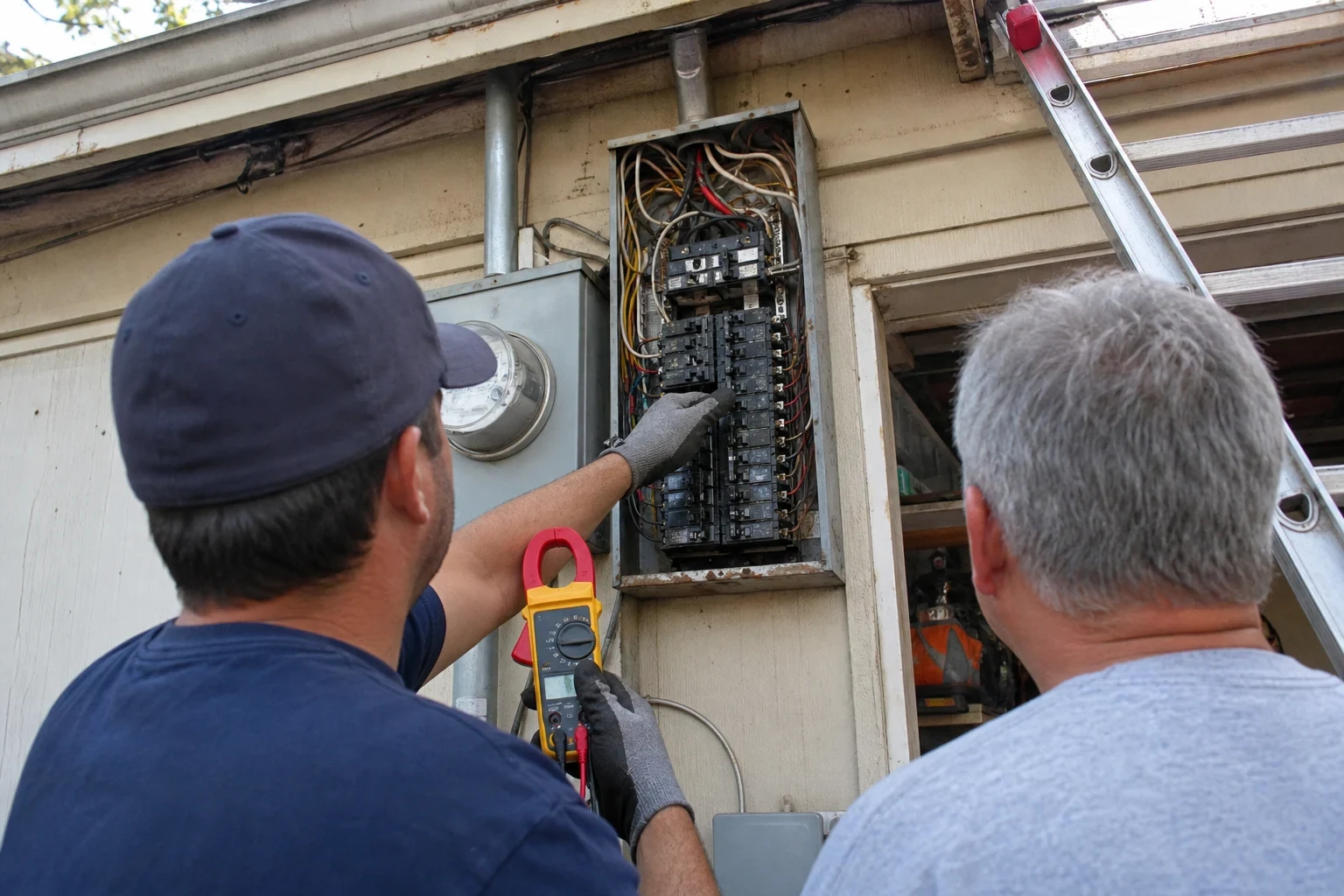
Most torque and clean visits are routine, but no two panels are the same. We tell you on the phone what we expect and explain any change before we do extra work.
- Panel size and count
- A full panel with many breakers takes longer than a small one. A house with a subpanel in the garage or a second panel adds time.
- Access
- An outdoor panel behind shrubs or a fence, or an indoor one behind shelving, takes extra setup.
- Utility disconnect
- Tightening main lugs often means the utility has to pull service first. That adds coordination and can affect timing.
- What we find
- A cracked breaker or a burnt lug is repair work, not maintenance. We show you and price it separately so you can decide.
Common Questions About Panel Maintenance
Something not covered here? (682) 327-5868
How much of the day will your home be without electricity?
For a typical single panel, plan on a few hours, not the whole day. We give you our best number when we book the visit. If a problem turns up that stretches the work, you hear from us before that number runs out, along with a new time to expect power back.
How often should a panel be torqued and cleaned?
There is no single rule for houses. Many homeowners do it every few years, or sooner if the panel has aluminum feeders, runs heavy loads or shows any of the warning signs. We can suggest a timeline after we see yours.
Can I just tighten the screws myself?
We would not. The main lugs stay live even with the main breaker off, and overtightening can damage the wire. The right torque value matters, and so does knowing the panel is actually dead.
Will you replace my breakers while you're in there?
Only if one is damaged and you agree to it. A good breaker stays in place. If we see one that is cracked, scorched or loose on the bus, we show you a photo and explain the fix.
Does this help with an older panel I'm worried about?
It tells you what condition it is in. Sometimes a tightening is all it needs. If the panel is worn past that point, we will say so plainly and you can weigh a panel upgrade on your own schedule.
Get Your Panel Checked Before Summer Load Hits
Tell us the panel location and whether you have a subpanel. We'll give you an arrival window and a shutoff estimate you can plan your day around.