ServicesGenerator Installation
Generator Installation in Dalworthington Gardens
Backup power for your home, put in the right order. We size the generator to what you need running, wire it through a proper transfer switch and give you a written timeline for the unit, the permit and the inspection. If a date slips, you hear it from us first, with the reason.
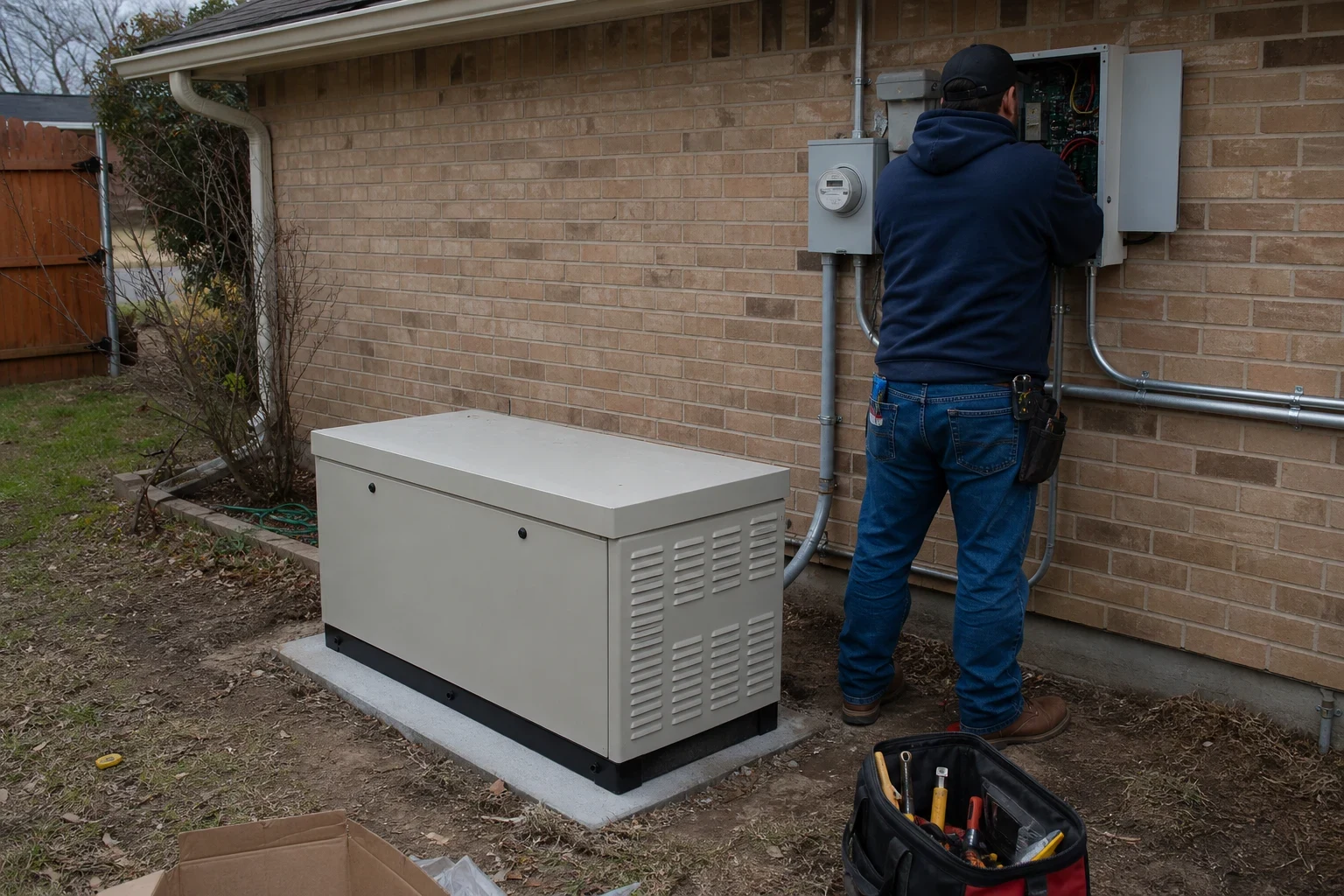
Backup power that switches on the right way
A generator only helps if it is wired to your home correctly. That means a transfer switch or interlock, so power from the generator never feeds back onto the utility lines. It also means the right size for what you actually need to run.
Some people want the whole house covered. Others just want the fridge, a few lights, the furnace fan and the garage door opener working. We start with that conversation, then measure your panel and your loads before we recommend anything.
The part most companies leave vague is the calendar. Standby units can take weeks to arrive, permits take time and inspections need a slot. We lay out each step with a realistic date range before you commit, so you are not left guessing.
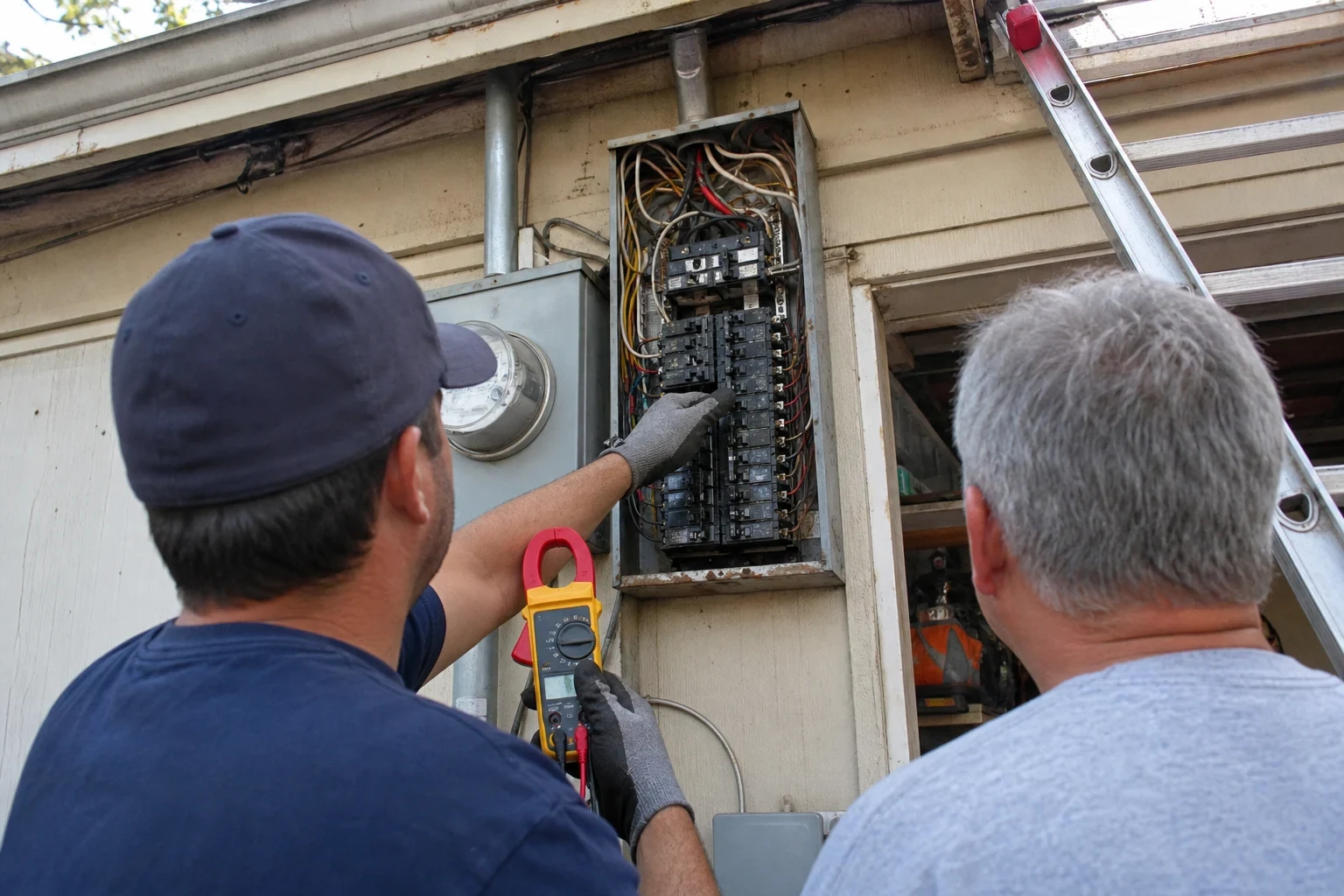
What a generator install includes
- 01
Load calculation
We look at your panel, your big appliances and what you want running in an outage. That tells us the generator size and whether a whole-home or partial setup makes sense.
- 02
Transfer switch or interlock
A standby unit is paired with an automatic transfer switch that takes over on its own when the grid drops. For a portable unit, we mount an inlet box on the outside wall and add a manual transfer switch or an interlock at the panel. One cord does the job, with no extension cords snaking through a window.
- 03
Pad, placement and clearances
The unit sits on a level pad outside, set back from windows, doors and vents as the manufacturer and code require. We plan the spot with you so it is easy to service and not in the way.
- 04
Wiring and fuel coordination
We run the conduit and wiring between the generator, the transfer switch and your panel. If the unit runs on natural gas, a plumber handles the gas line, and we line up the dates so nobody is waiting on anybody.
- 05
Permit, inspection and first run
Filing the permit is our job, done the way the local jurisdiction requires. We are on site when the inspector checks the work. Once it passes, we fire up the unit, run a test transfer and show you the controls.
Questions about Generator Installation?
Call(682) 327-5868Signs a generator is worth it for your home
Outages keep catching you off guard
Summer thunderstorms and winter ice can knock power out for hours or longer. If you have lost food or sat in a hot house more than once, it is time to plan for it.
Someone at home depends on power
Oxygen or other medical equipment, work you do from your kitchen table, or a relative who struggles in summer heat are all solid reasons to have backup ready.
You run a portable unit on extension cords
Propping a door open for cords lets exhaust drift inside, and thin cords get hot under heavy load. A wall inlet with an interlock lets you keep using the generator you own without either problem.
Your fridge and freezer are full of food you can't lose
A long outage in July can spoil a stocked freezer in a day. Putting those circuits on a generator protects more than comfort.
How the job runs, start to finish
- 1
Site visit and load check
We come out in a set arrival window, look at the panel, the outside spot and your loads. You get a written scope and a date range for each step.
- 2
Order and permit
We order the unit and apply for the permit. Generator lead times vary by brand and season, so we give you the supplier's date and update you if it changes.
- 3
Install day
Most installs take one to two days on site. Power is off for part of that time while we tie into the panel, and we tell you ahead of time when that will be.
- 4
Inspection and handoff
We schedule the inspection and are there for it. Then we run the generator, test the transfer and walk you through exercise cycles and basic care.
What moves the price
Every generator job is priced after we see the panel and the spot outside. The unit itself is a big part of it, but the wiring and setup around it matter just as much. You get a written estimate with each part broken out before any work is scheduled.
- Generator size and type
- Wiring in a portable unit you already own is the smaller job. A standby unit is a bigger investment, and the price climbs as the capacity does.
- Whole-home or partial coverage
- Covering every circuit takes a larger unit and transfer switch. Picking key circuits keeps both smaller.
- Distance and trenching
- The farther the generator sits from the panel, the more conduit and wire we run. Digging under walks or landscaping adds time.
- Panel condition
- A panel that is aging or has no open spaces can need attention before a transfer switch goes in. We show you why, and our panel upgrades page explains what that work looks like.
- Fuel and permit
- Gas line work by the plumber and permit fees are separate line items. We list them so nothing shows up late.
Generator installation questions
How long does a standby generator install take from start to finish?
The work on site is usually one to two days. The full timeline is longer because of unit lead times, the permit and the inspection slot. We give you a date range for each one at the site visit and call you if any of them shift.
Do you pull the permit?
Yes. We apply for the permit as required by the local jurisdiction and schedule the inspection. We are there when the inspector comes out.
Will the portable generator I have now work with a hookup?
In most homes it will. The setup is an inlet box on the outside wall plus an interlock or manual transfer switch at your panel. During an outage you plug a single cord into the inlet, move the switch and power the circuits you picked ahead of time.
What size generator do I need?
That comes down to what you want running. Keeping a refrigerator, some lights and the furnace fan going takes a small fraction of what central air plus an electric oven would pull. We work it out with a load calculation at your panel, not a guess based on square footage.
Should I look at a battery instead?
Batteries are quiet and need no fuel, but they run out on long outages unless they are paired with something to recharge them. Our home battery backup systems page covers that option, and we can talk through both at the site visit.
Who maintains it after the install?
Standby units need regular exercise runs, oil changes and checks. We handle that through our generator service and repair work, and we can set up a schedule that fits yours.
Get backup power on a timeline you can count on
Make a short list of what has to stay on during an outage. We will book a visit window, look over your panel and hand you a written scope with real dates.